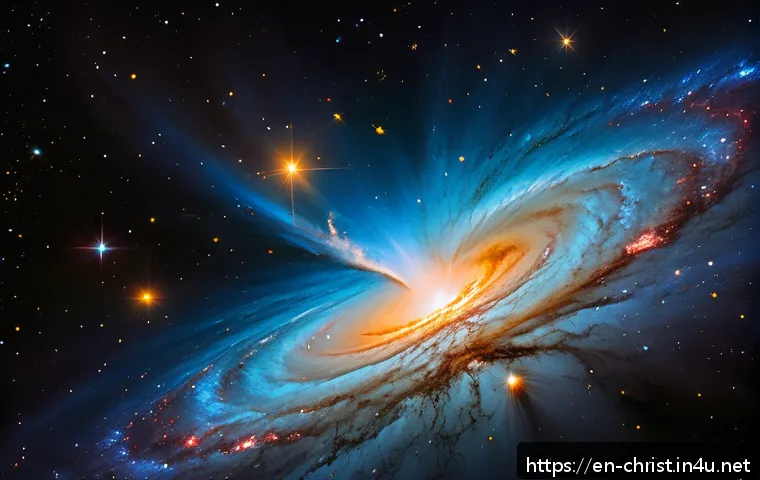
In a world where scientific discoveries constantly reshape our understanding of the universe, the dialogue between Christian theology and modern cosmology has never been more captivating.
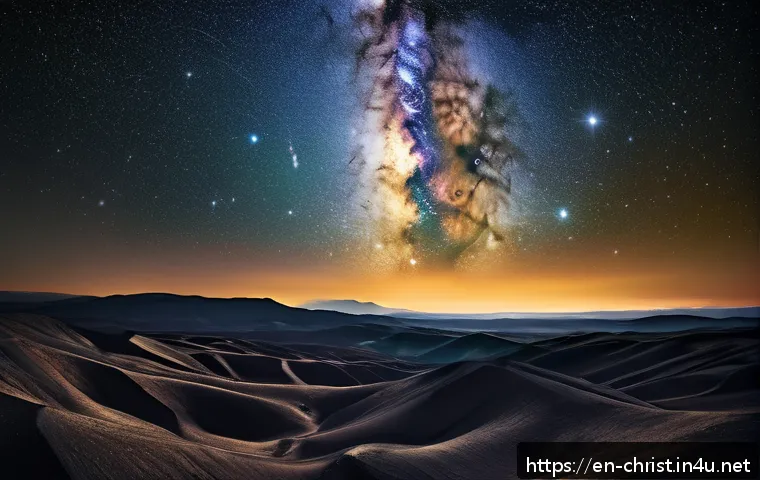
Recent advancements in astrophysics and quantum mechanics invite us to revisit ancient questions about creation with fresh eyes. How does the Big Bang theory align—or clash—with biblical narratives?
This exploration uncovers surprising intersections that challenge and enrich both faith and science. Join me as we delve into what cutting-edge science reveals about the origins of everything, sparking new insights and meaningful conversations.
The Narrative of Origins: Bridging Ancient Texts and Modern Insights
Reimagining the Beginning Through a Scientific Lens
When we look back at the earliest chapters of human understanding about the cosmos, ancient narratives often describe creation with a sense of purpose and divine orchestration.
Yet, with the advent of modern astrophysics, the story becomes far richer and more complex. The Big Bang theory, for instance, proposes a singular event from which space and time themselves emerged.
This doesn’t just shift the timeline; it challenges us to consider creation as a dynamic unfolding rather than a static moment. Personally, encountering this idea for the first time was eye-opening—it felt like a bridge between a poetic past and a data-driven present, urging a fresh dialogue rather than dismissal.
Interpreting Biblical Texts in the Context of Expanding Universes
The Bible, especially in its opening verses, speaks of a “formless void” and “darkness over the deep,” which intriguingly resonates with the scientific concept of a primordial cosmic state before the emergence of light and structure.
Some might argue this is mere coincidence, but others see a profound metaphor that captures the essence of the universe’s infancy. What struck me most is how these texts invite interpretation beyond literalism, allowing believers to integrate their faith with scientific discovery without feeling torn apart.
It’s a delicate balance—one that requires humility and openness on both theological and scientific fronts.
Common Ground and Divergence in Creation Timelines
One of the most debated points is the timeline—does the biblical “days” of creation align with the billions of years described by cosmology? Many contemporary theologians suggest that “days” could symbolize phases or epochs rather than 24-hour periods, a perspective that eases tension between scripture and science.
From my conversations with scholars and enthusiasts, this view feels like a practical way to honor the integrity of both realms. It’s less about forcing a perfect match and more about appreciating the layers of meaning that each tradition brings to our understanding of origins.
Cosmic Fine-Tuning and the Question of Purpose
Exploring the Universe’s Delicate Balance
The precision with which physical constants appear fine-tuned for life is nothing short of astonishing. From the strength of gravity to the cosmological constant, even the slightest variation could render the universe inhospitable.
This realization often leads people, myself included, to ponder whether this balance hints at intentional design. It’s a topic where science and theology converge intriguingly: while physics describes the mechanisms, theology asks why these particular values exist at all.
My own reflection on this has been a mix of awe and curiosity, pushing me to think beyond pure chance without jumping to simplistic conclusions.
Anthropic Principle: Science Meets Philosophy
The anthropic principle states that the universe’s laws appear as they do because if they were different, we wouldn’t be here to observe them. This circular logic can feel frustrating or enlightening depending on your perspective.
I’ve found it helpful to view the anthropic principle as a reminder of our unique place in the cosmos rather than a definitive explanation. It encourages humility, acknowledging the limits of our understanding while inviting philosophical and theological inquiry about existence and meaning.
Does Fine-Tuning Imply a Designer?
The leap from fine-tuning to a purposeful creator is significant and often controversial. Some interpret the universe’s parameters as evidence for a divine architect, while others propose multiverse theories to explain the apparent tuning without invoking design.
In my experience, engaging with both viewpoints deepens the conversation—rather than shutting down debate, it expands the scope of what’s possible. What resonates most with me is the invitation to explore mystery with both reason and reverence, recognizing that science and faith ask complementary questions about why we are here.
Quantum Mysteries and Theological Reflections
Quantum Mechanics and the Nature of Reality
Quantum theory introduces concepts like uncertainty, entanglement, and superposition, which challenge classical ideas of a deterministic universe. These phenomena make us question the very fabric of reality, much like theological discussions about divine omnipresence and providence.
I remember grappling with the strange behavior of particles that seem connected across vast distances—it felt oddly poetic, almost spiritual, and opened my mind to new ways of thinking about interconnectedness and causality.
Chance, Randomness, and Divine Sovereignty
The role of randomness in quantum events raises difficult questions for theology. How can an all-knowing, purposeful God work through processes that seem inherently unpredictable?
From my encounters with theologians and physicists alike, many propose that randomness at the quantum level doesn’t negate divine sovereignty but may instead reflect a universe that allows freedom and novelty within a broader order.
This perspective invites a more nuanced understanding of control and freedom in creation, one that resonates deeply with human experience.
Quantum Potential and the Idea of Creation Ongoing
Quantum mechanics suggests that reality isn’t fixed until observed, implying a universe in a state of ongoing potential rather than completion. This aligns intriguingly with theological views of creation as an ongoing act rather than a one-time event.
I find this idea both comforting and inspiring—it suggests that the cosmos, much like our own lives, is unfolding in partnership with a creative force that remains active and engaged, inviting participation rather than passive observation.
Faith, Science, and the Journey Toward Understanding
Embracing Questions Without Easy Answers
Both faith and science thrive on questions, yet they approach answers differently. Science demands evidence and testability; faith often embraces mystery and trust.
My personal journey has shown me that these approaches don’t have to be in conflict. Instead, they can complement each other, encouraging us to hold space for uncertainty while seeking deeper truths.
This balance is not always easy, but it enriches both our intellectual and spiritual lives.
The Role of Community in Navigating Complex Ideas
Discussing cosmology and theology is rarely a solo endeavor. I’ve found that engaging with diverse communities—whether scientific forums, faith groups, or interdisciplinary dialogues—helps broaden perspectives and deepen understanding.
Shared conversations create a space where doubts and discoveries coexist, fostering empathy and respect. This social aspect of learning has been one of the most rewarding parts of my exploration, reminding me that the quest for meaning is fundamentally a shared human experience.
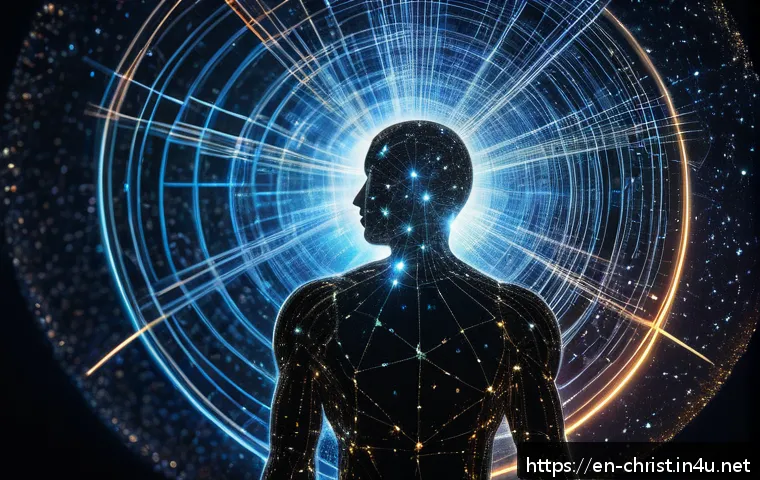
Inspiring Wonder as a Common Ground
Ultimately, both science and theology inspire wonder. Whether marveling at the vastness of galaxies or contemplating the depth of spiritual truths, that sense of awe connects us.
I’ve noticed that when conversations shift toward shared wonder rather than debate, barriers dissolve and genuine curiosity flourishes. This shared experience of amazement offers a hopeful path forward—a way to engage with the cosmos that honors both reason and faith.
Comparing Perspectives: Science and Scripture on Creation
| Aspect | Scientific Perspective | Theological Perspective |
|---|---|---|
| Origin of the Universe | Big Bang: Universe began ~13.8 billion years ago from a singularity | God as Creator: Universe created by divine will, often interpreted metaphorically or literally |
| Timeline | Billions of years with gradual evolution of matter and life | “Days” of creation possibly symbolic epochs or literal 24-hour periods depending on interpretation |
| Role of Chance | Random quantum events influence cosmic and biological evolution | Divine providence may work through or beyond randomness |
| Purpose and Meaning | Universe operates by natural laws without inherent purpose | Creation imbued with purpose and meaning by God |
| Nature of Reality | Dynamic, probabilistic, and interconnected at quantum level | Reality seen as creation sustained by God’s ongoing involvement |
Interpreting Ancient Wisdom in a Modern Context
The Challenge of Language and Metaphor
The ancient texts that form the foundation of many religious traditions were written in languages and cultures vastly different from ours. I’ve found that understanding these texts requires careful attention to metaphor, poetic imagery, and cultural context.
For example, “light” in biblical creation can be understood as symbolic of order emerging from chaos rather than simply physical illumination. This approach opens doors to richer interpretations that resonate with modern scientific knowledge while preserving spiritual depth.
Adapting Faith in the Age of Discovery
As scientific discoveries unfold rapidly, many believers wrestle with how to integrate these findings into their worldview without feeling threatened.
From my experience, faith that embraces questioning and growth tends to be more resilient and authentic. It’s not about abandoning tradition but rather allowing it to dialogue with new insights.
This dynamic process can rejuvenate faith, making it more relevant and meaningful in a world where knowledge is constantly expanding.
Education as a Bridge Between Worlds
One of the most powerful tools for harmonizing science and theology is education that encourages critical thinking alongside spiritual reflection. In classrooms, churches, and informal settings, fostering environments where questions are welcomed rather than feared helps cultivate a generation equipped to navigate complexity.
I’ve witnessed how this approach builds confidence and curiosity, empowering individuals to hold diverse perspectives without confusion or conflict.
Ethical Implications of Cosmological Discoveries
Human Responsibility in a Vast Universe
Learning about the immense scale and age of the cosmos can evoke feelings of insignificance, but it also highlights the preciousness of life on Earth.
This awareness has deepened my sense of responsibility toward stewardship of our planet and ethical treatment of one another. If we are part of a grand cosmic story, then our actions matter not just locally but in the broader narrative of existence.
Science as a Catalyst for Moral Reflection
Scientific progress, especially in fields like genetics and artificial intelligence, raises profound ethical questions. I find that cosmology, by expanding our perspective, encourages humility and caution in how we wield new knowledge.
It challenges us to consider not only what we can do but what we should do, blending empirical insight with moral wisdom rooted in faith traditions.
The Role of Hope and Meaning in a Scientific Age
In confronting the vastness and sometimes indifferent nature of the universe, maintaining hope can be difficult. Yet, the interplay between science and theology provides a framework for meaning that transcends despair.
Personally, this has been a source of comfort and inspiration—knowing that our search for understanding is part of a larger story filled with mystery, purpose, and possibility.
Conclusion
The exploration of origins through both ancient texts and modern science reveals a rich dialogue between faith and reason. Embracing complexity and mystery allows us to appreciate the universe from multiple perspectives. This journey encourages humility, wonder, and an ongoing quest for understanding that bridges past wisdom with contemporary insights.
Useful Information to Remember
1. Ancient narratives and modern science can coexist, offering complementary views on creation and existence.
2. The concept of “days” in scripture may represent symbolic epochs, not literal 24-hour periods.
3. Fine-tuning in the universe raises profound questions about purpose without demanding simple answers.
4. Quantum mechanics challenges traditional views of reality, inviting new theological reflections on freedom and creativity.
5. Engaging in community dialogue enriches understanding and fosters empathy between scientific and faith-based perspectives.
Key Takeaways
Understanding origins requires openness to both scientific evidence and theological interpretation, recognizing that each offers valuable insights. The balance between faith and reason is best maintained through humility, ongoing inquiry, and respect for diverse viewpoints. Ultimately, this integrated approach inspires awe and deepens our connection to the cosmos and each other.
Frequently Asked Questions (FAQ) 📖
Q: How does the Big Bang theory relate to the biblical account of creation?
A: The Big Bang theory describes the universe’s origin as a rapid expansion from an extremely hot and dense state about 13.8 billion years ago. Many theologians see this scientific explanation as compatible with the biblical narrative that speaks of creation ex nihilo, or creation out of nothing.
While the Bible doesn’t provide a scientific timeline, its emphasis on a beginning aligns surprisingly well with the concept of a universe having a definite starting point.
This intersection invites believers to appreciate scientific insights as deepening their understanding of God’s creative work rather than contradicting faith.
Q: Does modern cosmology challenge the traditional Christian view of God as Creator?
A: Not necessarily. Modern cosmology often raises profound questions about origins, but it doesn’t inherently exclude the role of a Creator. In fact, some Christian thinkers argue that the complexity and order revealed by astrophysics and quantum mechanics point to an intelligent design behind the cosmos.
Rather than undermining faith, these discoveries can inspire awe and reinforce the belief in a purposeful creation. The dialogue between science and theology becomes a space where mystery and reason coexist, enriching spiritual perspectives.
Q: Can quantum mechanics help explain the moment of creation described in the Bible?
A: Quantum mechanics explores the behavior of particles at the smallest scales and introduces concepts like uncertainty and spontaneous events. Some scientists and theologians speculate that quantum phenomena might shed light on how the universe could originate from a vacuum fluctuation or a similar event, which resonates metaphorically with the biblical idea of creation from nothing.
While quantum theory doesn’t provide a direct proof of divine action, it opens fascinating avenues for understanding how the universe’s birth could be both scientifically plausible and theologically meaningful.